
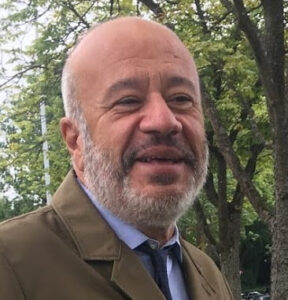
 Alberto Bisin is Professor of Economics at New York University. He is an elected fellow of the Econometric Society and of the Society for the Advancement of Economic Theory. He is also a fellow of the NBER, CESS at NYU, and the CEPR. He is the co-organizer of the annual NBER Meeting on Culture and Institutions. He holds a Ph.D. from the University of Chicago, obtained in 1994. He has held academic positions at MIT and NYU and visiting positions at many institutions, including Stanford, Berkeley, Chicago, Minnesota, Paris School of Economics, and Bocconi. His main academic contributions are in the fields of Historical Economics, Social Economics, Financial Economics, and Behavioral Economics. He has published more than 60 academic papers in economics journals and books, for which he is widely cited. He has been Associate Editor at several academic journals, including the Journal of Economic Theory and the Journal of Comparative Economics. He co-edited the Handbook of Social Economics and the Handbook of Historical Economics.
.
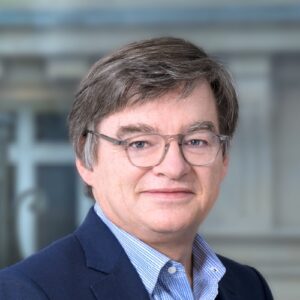 Jean-Philippe Bouchaud is Chairman of CFM and member of the French “Academie des Sciences”. He founded ‘Science and Finance’ in 1994, the research arm of CFM with Jean-Pierre Aguilar, which merged with CFM in 2000. He supervises the research team alongside Marc Potters and maintains strong links with the academic world, with two active chairs with Ecole Polytechnique (Econophysics and Complex Systems) and ENS (Data Science). He holds a PhD in theoretical physics from ENS in Paris and has published over 400 papers across different fields (statistical physics, random matrix theory, economics and finance) and 4 books.
.
 Louis Chauvel is a Full Professor of Sociology at the University of Luxembourg and founder of the Institute for Research on Socio-Economic Inequality IRSEI as a PEARL chair. His multidisciplinary expertise integrates sociology, economics, statistics, and dynamic modeling, rooted in math and economics (ENSAE), social sciences (ENS-EHESS), sociology (PhD University of Lille) and political sciences (HDR Sciences Po Paris). A pioneer in generational social change and population health, he developed influential tools like Age-Period-Cohort (APC) models and 3D “strobiloid” visualizations. His bibliography features Les Classes moyennes à la dérive (2006), La Spirale du déclassement (2019) and high-impact research in Social Forces, European Sociological Review etc. Formerly Prof at Sciences Po Paris and the University of Geneva, he is a member of the Institut Universitaire de France and a former Alliance Fellow at Columbia. His comparative work across Europe, the Americas, and China on wealth, youth, and the middle class continues to redefine the social sciences. Backed by a multimillion FNR PEARL funding, he leads international collaborations and represents Luxembourg at the sociological consortium ECSR.
.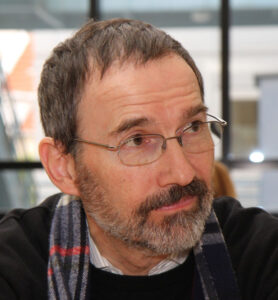 Marc Fleurbaey is CNRS Senior Researcher, Professor at Paris School of Economics, and Associate Professor at ENS-Ulm. Author of Beyond GDP (with Didier Blanchet, OUP 2013), A Theory of Fairness and Social Welfare (with François Maniquet, CUP 2011), and Fairness, Responsibility and Welfare (OUP, 2008), he is a former editor of Social Choice and Welfare and Economics and Philosophy and is currently an associate editor of Free & Equal. He is one of the initiators of the International Panel on Social Progress, and lead author of its Manifesto for Social Progress (CUP 2018). He was a coordinating lead author for the IPCC 5th Report, a member of the United Nations Committee for Development Policy from 2016 to 2021.
.
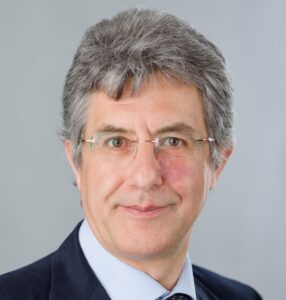 Rosario N. Mantegna is professor of Physics at Palermo University, Palermo, Italy and external faculty member of the Complexity Science Hub, Vienna, Austria. He was professor of Economics and Network Science at Central European University, Budapest, Hungary and honorary professor of Computer Science at University College London, London, UK. He is associated with the UCL Centre for Blockchain Technologies. His research concerns interdisciplinary applications of statistical physics. He is a leading expert in Lévy stable processes. He co-introduced the Truncated Lévy processes and wrote the fastest algorithm known to simulate symmetrical Lévy processes. He was a pioneer in the field of econophysics. In 1991 he wrote the first econophysics paper and in 1999, he coauthored the first book on econophysics. The same year, he published the first paper on similarity-based networks proposing to use the minimum spanning tree as a filtering tool in multivariate complex systems. The methods of information filtering introduced by him and his collaborators are widely used by academicians and applied scientists in the analysis and modeling of complex systems. In 1999, he founded the Observatory of Complex Systems, a research group of Palermo University. In 2011, his team introduced the concept of statistically validated networks to highlight links of a projected network that aren’t compatible with a null hypothesis assuming heterogeneity of the elements. His recent interests of research concerns (a) statistical validation of hyperlinks, (b) co-morbidity networks, (c) higher order processes and structures in neuroscience, (d) investment decisions of single legal entities, and (e) underlying patterns of high frequency trading. Mantegna has participated in several national and international research projects contributing to the management and coordination of them. Examples are the COST P10 action “Physics of Risk”, the GIACS (General Integration of the Applications of Complexity in Science) coordination action of the EU, the CRISIs project of EU, and the INET project on systemic risk interlinkages. In 2008, within the GIACS coordination action, he promoted the “Jerusalem Declaration on Data Access, Use and Dissemination for Scientific Research”.
.
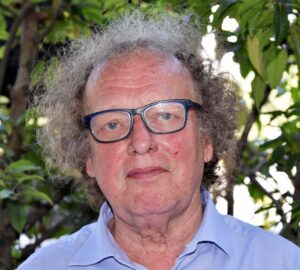 André Masson is engineer from the École Polytechnique, emeritus Senior fellow at the CNRS, Director of studies at EHESS (Ecole des Hautes Etudes en Sciences Sociales) and professor at the Paris School of Economics. His research topics focus on the micro-economics of intertemporal and intergenerational households’ choices: savings and wealth, attitudes and behaviours towards risk, time preference and saver’s rationality; bequests motives and life products. They also concern pensions and social protection, philosophies of the welfare state and the interactions between public and private solidarity between generations. More recently, his work concentrates on the institution of inheritance and wealth transfers taxation. He has published two recent books (written in French) on this topic: Chronicle on a Failing Inheritance Tax, PUF, (April 2023), 448 p., and Inheritance in the 21st Century, Odile Jacob, (May 2025), 336 p.
.
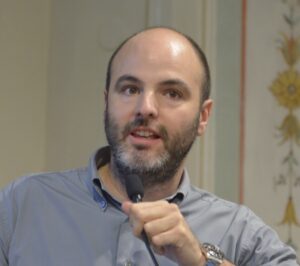 Andrea Roventini is professor of economics at Scuola Superiore Sant’Anna (Italy), where he is the director of the Institute of Economics. He is research fellow at OFCE, Sciences Po (France) and World Inequality Lab (France). He holds a PhD in Economics and Management from Scuola Superiore Sant’Anna. His main research interests include complex system analysis, agent-based computational economics, business cycles, economic growth, climate change and inequality. He has been the principal investigator and consortium coordinator of the Horizon 2020 GROWINPRO project financed by the European Commission, and the unit leader and coordinator of the EEIST project financed by the UK’s Department for Business, Energy and Industrial Strategy and the Children’s Investment Fund Foundation. His works have been published in interdisciplinary and economics journals such as PNAS, Nature Climate Change, Nature Sustainability, Journal of the European Economic Association, Journal of Applied Econometrics, Journal of Economic Behavior and Organization, Research Policy, Journal of Financial Stability, Economic Inquiry, Journal of Economic Dynamics and Control. He is editor of Industrial and Corporate Chance – Macro Economics and Development and advisory editor of the Journal of Evolutionary Economics.
.
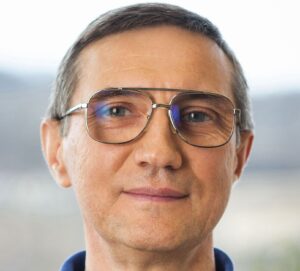 Victor Yakovenko is a Professor of Physics at the University of Maryland. He is a Fellow of the American Physical Society and was a recipient of the Sloan Research Fellowship and the Packard Fellowship in Science and Engineering. He is a theoretical physicist, studying electronic properties of various materials for more than 40 years. He is also well known for his work in econophysics, applying methods of statistical physics to economics and finance. Victor Yakovenko was born in Donetsk, Ukraine and attended the Ukraine-wide physical-mathematical boarding high school in Kyiv. He graduated from Moscow Physical-Technical Institute with M.S. in 1984 and completed his Ph.D. at the Landau Institute for Theoretical Physics in 1987, where he was subsequently employed as a Research Scientist. In 1991 he became a postdoc at the Department of Physics, Rutgers University in USA. In 1993 he joined the University of Maryland, College Park as an Assistant Professor and became an Associate Professor in 1999 and a Full Professor in 2004. More info at https://physics.umd.edu/~yakovenk/